
Safe learning method
Occupational Safety protects Health and Career

Jul
To create a safe working environment, boost work performance, and avoid unnecessary consequences, the article below provides detailed and easy-to-understand information to help you better understand the importance of occupational safety in protecting workers’ health and careers.
I. Exploring Occupational Safety
Occupational safety is an essential aspect in any field. It protects workers’ health and guides their career development while positively affecting productivity and business success. Occupational safety not only ensures workers are protected from accidents and injuries but also makes them feel valued and respected by the company. In this article, we will go into detail about the importance of occupational safety and effective solutions to ensure a safe and sustainable working environment.

II. The Importance of Occupational Safety
Occupational safety plays a crucial role in protecting workers’ health. According to research, millions of people die or are injured each year due to workplace accidents and occupational diseases worldwide. However, many workplace accidents can be prevented by applying proper safety measures.
It has a positive impact on workers’ performance. When workers feel safe and supported at work, they focus better on their tasks, increasing productivity.
Applying safety measures and risk reduction can significantly decrease the number of accidents and occupational illnesses.
Additionally, a safe working environment helps attract and retain talented employees. Workers tend to prefer workplaces that prioritize safety and care for their health. Therefore, investing in occupational safety training is an effective way to attract and retain top talent.
Applying safety measures and reducing risks can significantly decrease workplace accidents and occupational diseases, protecting workers’ health and strengthening their careers. You can find more details about occupational safety training content according to Decree 44.

III. Workplace Risks and Hazards
At the workplace, workers face numerous potential risks and hazards daily. Industries such as construction, manufacturing, and processing often have specific hazards, including:
- Equipment and Tool Risks: Unsafe equipment and tools can lead to accidents and injuries. To minimize this risk, regular inspection, maintenance, and repair are necessary, along with providing proper usage guidance to workers.
- Collision and Collapse Risks: In industries like construction and excavation, collisions and collapses occur frequently. Protective measures and personal protective equipment (PPE) can reduce these risks.
- Chemical and Toxic Hazards: Work environments may contain harmful chemicals and toxins affecting workers’ health. Proper storage, usage, and handling of chemicals are essential to avoid these hazards.
- Falling Object Risks: Working at heights or moving large objects can lead to falling object hazards and injuries. Proper use of PPE can mitigate this risk.
- Psychological Stress Factors: Not only physical but also psychological stress can affect occupational safety. High-pressure, unsafe environments can reduce concentration and increase accident risk.
According to the U.S. Occupational Safety and Health Administration (OSHA), approximately 4.1 million workers suffer serious injuries each year due to hazards such as collisions, collapses, toxic chemicals, and inadequate protective equipment. These hazards can have consequences not only for health but also negatively impact workers’ careers. You can find more information about occupational safety training duration according to Decree 44.
IV. Effective Solutions for Occupational Safety
To ensure occupational safety and protect workers’ health, the following effective solutions should be applied:
- Risk Assessment and Control: Assess potential risks and implement control measures to minimize workplace accidents. Create detailed risk control plans and conduct regular inspections to ensure effectiveness.
- Training and Awareness: Provide training for all employees on occupational safety. Ensure everyone understands safety rules, procedures, and measures related to their work. Training should be regularly updated to refresh knowledge and remind employees of safety protocols.
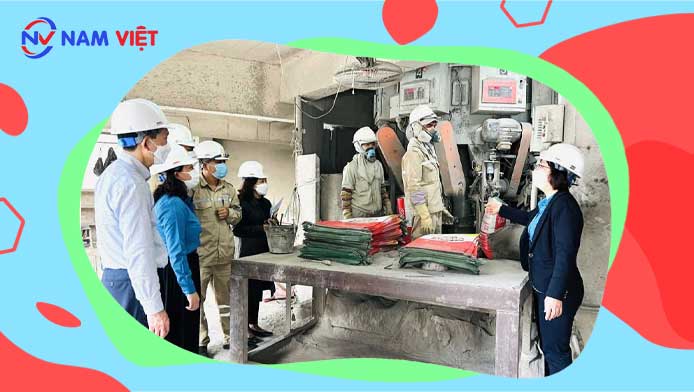
- Use of Personal Protective Equipment (PPE): Provide appropriate PPE and ensure correct usage for each type of work. PPE includes helmets, goggles, masks, gloves, and non-slip shoes. Regular training and checks are necessary to ensure compliance.
- Optimize Workspace Arrangement: Organize work and workspace logically to avoid collisions and unnecessary accidents. Keep walkways and work areas clear, clean, and organized to reduce accident risks.
- Regular Monitoring and Evaluation: Conduct regular safety inspections to ensure compliance with safety rules and procedures. Improve safety measures based on evaluation results.
- Build a Safety Culture: Create a positive working environment that encourages participation and commitment to occupational safety. This encourages workers to report hazards, suggest improvements, and engage in risk assessment processes.
According to the National Safety Council (NSC) National Safety and Health Program, risk assessment and control, occupational safety training are crucial steps to ensure workplace safety. Proper use of PPE and fostering a safety culture also play important roles in protecting workers’ health and careers.
To minimize workplace risks and hazards, risk assessment and control, training and awareness, PPE usage, workspace optimization, and building a safety culture are effective and specific solutions.

V. Benefits of Occupational Safety
Investing in occupational safety brings numerous benefits to both employees and organizations. Key benefits include:
- Protecting Workers’ Health: Occupational safety prevents unnecessary accidents and injuries, safeguarding workers’ health and improving quality of life.
- Improving Work Performance: A safe work environment helps employees focus better, enhancing productivity and efficiency.
- Reducing Costs and Losses: Investing in safety reduces costs related to accidents, compensation, and regulatory penalties while minimizing losses due to absenteeism and work disruption.
- Building Trust and Respect: Ensuring employee safety fosters trust and respect toward the organization, boosting morale and commitment.
- Attracting and Retaining Talent: A safe work environment is key to attracting and retaining skilled employees, contributing to a high-quality workforce.
According to a study by DNV GL, companies investing in occupational safety have 20%–60% higher profitability. This proves that protecting workers’ health and career development brings long-term effectiveness and success for organizations.
Investing in occupational safety not only protects employees’ health but also benefits the business. Research by DNV GL shows that companies investing in safety achieve higher profitability, proving that safeguarding workers’ health and career is a long-term effective commitment for organizations.

VI. Occupational Safety Training Competence of An Toàn Nam Việt
An Toàn Nam Việt is a reputable and high-quality occupational safety training center in Vietnam. Training sessions are conducted continuously at factories, production facilities, and construction sites across all 63 provinces in Vietnam.
REGISTER FOR OCCUPATIONAL SAFETY TRAINING SERVICE
Occupational Safety Training License
- An Toàn Nam Việt has been inspected and certified by the Department of Labor Safety under the Ministry of Labor, War Invalids, and Social Affairs, certifying its qualification for occupational safety and hygiene training. This reinforces our capability in occupational safety training.

Training Materials and Lectures
- Before being included in occupational safety training courses, materials are reviewed and validated to ensure accurate knowledge and effective application.
- Our instructors’ teaching methods follow the standardized methodology of An Toàn Nam Việt, developed by experts in occupational safety and hygiene training to maximize knowledge absorption for trainees.
Facilities
- Managing classroom conditions affects training efficiency and knowledge retention.
- Our training facilities are spacious, meeting standards for area, lighting, and training equipment.
VII. National Occupational Environment Monitoring Center
Nam Viet Occupational Environment Monitoring Center is a professional unit monitoring and measuring workplace environmental quality across all provinces of Vietnam. With an experienced team of environmental monitoring specialists, the center uses modern equipment ensuring accuracy and reliability.
In addition to monitoring services, the center assists clients in planning, handling, and tracking workplace environmental issues. With the motto “Customer First,” it ensures client satisfaction, meeting all customer needs and providing optimal solutions.
REGISTER FOR OCCUPATIONAL SAFETY TRAINING SERVICE
With investment in technology, equipment, and human resources, Nam Viet’s monitoring center has become a reputable unit in workplace environment monitoring in Ho Chi Minh City with the following goals:
- We value our brand reputation and the quality of our services.
- We provide clients with the best and most suitable solutions.
- Our team of experienced Masters and Engineers is committed to environmental protection and business benefit.
- By choosing Nam Viet Environmental Monitoring, companies receive professional services and the best cost advantages.
The workplace environmental monitoring process at Nam Viet includes the following basic steps:
- Before monitoring, we ensure all equipment is calibrated according to legal regulations.
- Follow the complete monitoring procedures committed to the Department of Health.
- Report monitoring results honestly to the employer.
- If results indicate unsafe conditions, Nam Viet will provide solutions, and the workplace will:
- Implement measures to improve working conditions and minimize harmful impacts, preventing occupational diseases.
- Organize early detection health checks for occupational and related diseases for workers in unsafe positions.
- Provide in-kind compensation to workers according to labor law.