
Health
Effective Methods for Treating Keloid Scars
Dec
In the journey of skincare, keloid scars are often a major concern. This article will take you on an interesting journey to discover the most advanced methods for treating keloid scars. Enjoy the innovations in skincare technology, from modern therapies to natural remedies. Join us to discover how to regenerate skin and reduce scars, giving you smooth and confident skin.
I. Why Keloid Scars Appear and Their Psychological Impact on People with Scars
Keloid scars, although not harmful to health, carry significant psychological effects for those who have to accept them on their bodies. To better understand why keloid scars appear and their psychological impact, we need to focus on the scar formation process and how it affects the mood and confidence of the person bearing them.
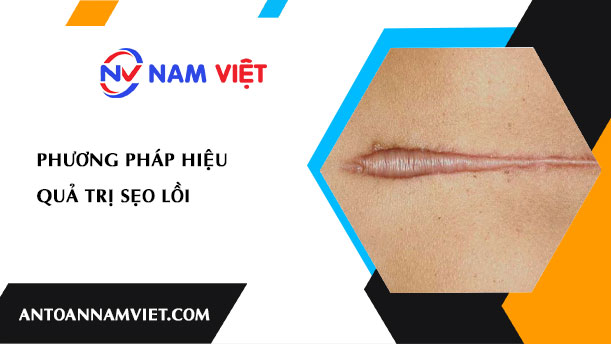
Keloid scars appear when collagen tissue grows excessively, creating lumps that are larger and harder than the original. This often happens when the wound cannot reconnect, and the fat tissue and blood vessels in the dermis protrude to connect the two epidermal edges, forming a scar.
Psychological Impact of Keloid Scars
- Low Self-Esteem and Sad Mood: Keloid scars, especially when they appear in visible locations, can make the person feel self-conscious and lack confidence. These emotions can negatively impact daily mood, causing the person to feel sad and dissatisfied with their appearance.
- Social Psychological Impact: Keloid scars can create difficulties in social situations, such as meeting new people, participating in sports activities, or even in personal relationships. Self-consciousness about the scar’s appearance can cause the person to avoid social situations and create psychological barriers.
- Need to Confront and Seek Solutions: Due to the negative impact on mood, many people with keloid scars have a need to confront this issue and seek solutions. Scar treatment becomes an important part of the psychological recovery process and regaining confidence in daily life.

II. Skin Structure and the Process of Keloid Scar Formation After Injury, Helping to Better Understand the Causes of Keloid Scars
The structure of the skin plays an important role in the process of keloid scar formation after an injury, a complex phenomenon that, to understand better, we need to look deeper into the causes of keloid scars and how the skin structure interacts in this process.
The skin, organized into three main layers including the epidermis (outer layer), dermis (collagen tissue), and hypodermis (fat tissue and blood vessels), plays an important role in the natural wound healing process. When the skin is damaged, the epidermis creates a wound, and if the wound is small (less than 1 cm), the epidermis can reconnect on its own, and the skin will heal without forming a scar. Conversely, when the wound is larger than 1 cm, the epidermis often cannot regenerate, and the hypodermis will protrude to connect the two epidermal edges, forming a scar.
An important part of the keloid scar formation process is collagen tissue. When collagen tissue grows excessively, it becomes harder and protrudes above the skin surface, forming large lumps. This phenomenon often occurs when the wound heals slowly or unevenly. The uncontrolled growth of collagen tissue can lead to keloid scars, and there are even cases of primary keloids in areas with no history of trauma.

III. Various Treatment Methods Such as Injections, Surgery, Laser, Silicone Gel, and Cryotherapy
In dealing with keloid scars, many different treatment methods are applied, each offering different effectiveness.
Injections: The injection method often uses collagenase inhibitors, helping to reduce the pigmentation of the scar area. Results can be maintained for 6-12 months, and this method can be repeated multiple times depending on the size and characteristics of the scar.
Surgery: The surgical method often includes excising the scar and injecting corticosteroids to reduce swelling. For large and complex keloid scars, scar abrasion measures may be applied to achieve uniformity with the surrounding skin.
Using Silicone Gel: Silicone gel sheets are used to treat keloid scars, especially effective for new scars. This method requires patience, with the gel being used for about 6-12 months and ensuring hygiene for the applied skin.
Cryotherapy (Cold Surgery): This method uses liquid nitrogen to freeze the scar, causing damage and destroying capillary cells. Results are achieved after 8-10 treatments, and if combined with steroid injections, the effectiveness can be increased up to 84%.
Using Laser: The use of laser is often only recommended for new and vascular keloid scars. However, the effectiveness of this method is not uniform, and there is a 40-90% risk of recurrence after a long period of application.

IV. Injections for Treating Keloid Scars, Including the Potential and Limitations of This Method
The injection method is one of the effective ways to reduce keloid scars; however, it also comes with potential and limitations that need to be carefully considered.
Potential of Injections:
- Reduce Pigmentation and Scar Development: Injections often use collagenase inhibitors to reduce the excessive growth of collagen tissue, helping to fade the keloid scar. This process can last from 6-12 months, providing a temporary but effective solution.
- Repeatability and Dosage Adjustment: Injections can be repeated multiple times after about 1-2 months, depending on the size and nature of the scar. This provides flexibility in adjusting the drug dosage to achieve the best effect.
Limitations of Injections:
- Temporary Effect: Although injections can reduce the pigmentation and size of the scar, the effect usually only lasts for a short period. This requires periodic repetitions to maintain the result.
- Possibility of Recurrence and Uneven Results: There is a 40-90% risk of scar recurrence after a long period of applying the injection method. The results are also not uniform among cases, depending on the individual’s constitution and the nature of the scar.
- Requires Continuity for Optimal Results: To maintain results, injections need to be repeated regularly. This can create inconvenience and require a long-term commitment from the patient.
- Risk of Side Effects: There may be a risk of side effects such as pain, swelling, or irritation at the injection site, although these are usually temporary and mild.
Overall, injections are a potentially effective method for keloid scars, but they also come with limitations that need to be carefully evaluated before deciding to use them. The choice of treatment method should be based on the specific condition of the scar and the patient’s personal goals.

V. Surgical Method, Specifically Scar Excision and Corticosteroid Injections
The surgical method, especially scar excision and corticosteroid injections, represents a detailed and effective approach in dealing with keloid scars.
1. Scar Excision:
Procedure:
- This method is performed by cutting away the keloid portion to create an even skin surface.
- Usually, after excising the scar, the doctor will inject corticosteroids to reduce swelling and prevent collagen tissue regeneration.
Advantages:
- Immediate effectiveness in reducing the size and protrusion of the scar.
- Suitable for large keloid scars that are not appropriate for non-invasive methods.
Disadvantages:
- May leave a new scar after the surgical process.
- Requires recovery time and post-operative care.
2. Corticosteroid Injections:
Procedure:
- After scar excision, the doctor often injects corticosteroids into the scar area to reduce inflammation, swelling, and prevent excessive collagen regeneration.
Advantages:
- Effective in controlling collagen tissue growth, reducing swelling, and fading the scar.
- This method is often used after scar excision surgeries to optimize results.
Disadvantages:
- Needs to be repeated periodically to maintain effectiveness.
- Side effects such as temporary pain and swelling at the injection site may occur.

VI. Using Silicone Gel to Treat Keloid Scars, Especially Its Positive Effects on New Scars and High-Benefit Target Groups
The method of using silicone gel has proven to be an effective option in reducing and treating keloid scars, especially in cases of new scars and for specific target groups.
1. Positive Effects on New Scars:
- Ability to Prevent Collagen Tissue Growth:
- Silicone gel often helps control the excessive growth of collagen tissue, preventing keloid formation from the start.
- Reduces Pain and Discomfort:
- Using the gel helps reduce pain and discomfort at the scar site, creating a more comfortable feeling for the patient.
2. High Benefits for Specific Target Groups:
- Keloid Scars in Children and Young People:
- For this target group, silicone gel is often highly effective because the keloid scars are new and the recovery potential is good in subjects with many new cells.
- Pregnant Women:
- Pregnant women often benefit greatly from using silicone gel as it is a safe option that does not affect the fetus, helping to control scar development.
- People with Sensitive Skin:
- Silicone gel usually does not cause much irritation or side effects, making it a safe and suitable method for people with sensitive skin.
3. Use for New Scars and Ensure Hygiene:
- For New Scars:
- The effectiveness of silicone gel is usually higher when used on new scars, especially when started right after the wound has healed.
- Ensure Hygiene:
- Maintaining hygiene for the skin and scar is important when using silicone gel to avoid infection and ensure the therapy’s effectiveness.

VII. Advantages and Disadvantages of Using Laser in Keloid Scar Treatment
The use of laser is one of the advanced methods in treating keloid scars; however, like any method, it also comes with its own advantages and disadvantages.
Advantages of Using Laser:
- Effective for New Keloid Scars: Laser is often effective for new keloid scars that are in the vascular stage, helping to control collagen tissue growth.
- Less Pain and Quick Recovery Time: The laser method is usually less painful than surgical methods, and the recovery time after treatment is often short.
- Does Not Disrupt Surrounding Skin Structure: Laser has high precision, helping to reduce the risk of damaging the skin structure around the scar.
- No Surgery Required: Does not require a surgical procedure, reducing the risk of infection and increasing safety for the patient.
Disadvantages of Using Laser:
- Uneven Effectiveness: Not all types of scars respond positively to laser treatment. The effectiveness can be uneven depending on the specific nature of the scar and the patient’s constitution.
- High Risk of Recurrence: There is a high risk of keloid scar recurrence after a long period of applying the laser method, especially when the scar has high tissue regeneration properties.
- Possibility of Causing Temporary Pain and Swelling: Although less painful than surgery, using laser can still cause temporary pain and swelling in the treated area.
- Limitations for Some Types of Scars: Laser is usually suitable for new and specific scars; not all types of scars benefit from this method.

An Toan Nam Viet – a leading unit in providing occupational safety training and workplace environmental monitoring services. We are proud to be a trusted partner for businesses, helping ensure a safe working environment and protecting workers' health.With extensive experience and a team of top experts, we are committed to delivering high-quality services while meeting all regulatory requirements on occupational safety and environmental monitoring.
Our occupational safety training services include educating and raising awareness among employees about safety regulations, equipping them with skills to handle dangerous situations, and implementing accident prevention measures. We continuously update and apply the latest knowledge to ensure your employees always work in a safe environment, minimizing the risk of occupational accidents and protecting their lives.
With our workplace environmental monitoring services, we use the most advanced equipment and methods to measure, monitor, and analyze the quality of air, water, and noise in the working environment. We provide detailed and accurate reports on pollution levels, helping businesses implement solutions to improve working conditions, ensure legal compliance, and create a healthy workplace for employees.
Contact Information:
- Nam Viet Occupational Safety Training and Environmental Monitoring Co., Ltd.
- Phone: 0908 111 791
- Email: lienhe@en.antoannamviet.com
- Website: https://en.antoannamviet.com