
Safe learning method
Handbook of Labor Safety and Health Law

Aug
In the article below, let’s explore the Occupational Safety and Hygiene Law Handbook: Protecting health and ensuring workplace safety, preventing unnecessary accidents. This helps businesses optimize working conditions for employees.
I. Why is the Occupational Safety and Hygiene Law important and necessary for the workplace?
The Occupational Safety and Hygiene Law (OSHL) plays an extremely important and necessary role in the workplace for the following reasons:
- Protecting employees’ health and lives: OSHL ensures that working conditions meet safety and hygiene standards. This helps businesses reduce the risk of occupational accidents, occupational diseases, and improve workers’ health.
- Preventing injuries and fatalities: Minimizing hazardous factors and improving accident and explosion prevention. As a result, the level of injuries and fatalities in the workplace is significantly reduced.
- Improving performance and work efficiency: A safe and healthy working environment enables employees to work effectively. Therefore, employees can focus better on their tasks, leading to higher productivity for the company.
- Enhancing corporate credibility: A safe and hygienic working environment builds a positive corporate image. This can attract and retain talented employees while gaining trust from customers and partners.
- Legal compliance and minimizing legal risks: Complying with OSHL regulations helps businesses avoid legal violations and reduces risks of penalties or legal disputes related to occupational accidents.
- Sustainable development and environmental protection: OSHL not only protects workers but also the environment. Managing and minimizing pollutants and hazardous factors in the production process forms the foundation for sustainable development and environmental protection.

II. 10 fundamental OSHL regulations you need to know.
The Occupational Safety and Hygiene Law (OSHL) is a comprehensive legal document that regulates the working environment and ensures worker safety. Below are the 10 fundamental OSHL regulations you should know:
- Health and life protection: OSHL aims to protect employees’ health and lives by ensuring a safe and healthy working environment.
- Training and instruction: The law requires employers to provide safety and occupational safety training and instruction before employees perform their tasks.
- Use of protective equipment: Employers must provide and require employees to use protective equipment such as helmets, safety glasses, gloves, chemical-resistant coats, etc.
- Inspection of machinery and equipment: All machinery and equipment must be periodically inspected to ensure safe operation.
- Monitoring and checking: Businesses must conduct regular monitoring and inspections to detect and eliminate hazards.
- Accident reporting: If an occupational accident occurs, employers must immediately report it to the competent authority for handling and investigation.
- Prohibition of child labor: OSHL strictly prohibits employing workers under 15 or workers under 18 for hazardous work.
- Restrictions on employing female workers in specific jobs: Female workers are not allowed to perform certain jobs that pose high risks, especially during pregnancy or nursing periods.
- Periodic health checks: Businesses must organize periodic health examinations to detect occupational diseases early and protect employees’ health.
- Responsibilities of state agencies: The law clearly defines the responsibilities of state agencies in monitoring and enforcing OSHL compliance.

III. Applying OSHL principles to minimize workplace accidents.
Applying Occupational Safety and Hygiene (OSHL) principles is a vital part of the Occupational Safety and Hygiene Law Handbook to effectively reduce workplace accidents and ensure worker safety. Below are methods to apply OSHL principles:
- Training and instruction: Ensure all employees receive full training and instruction on safety rules and procedures. Workers must understand potential hazards and develop prevention skills against occupational accidents.
- Use of protective equipment: Ensure proper and complete use of protective equipment such as helmets, safety glasses, gloves, safety shoes, etc.
- Equipment inspection and maintenance: Ensure all machinery and equipment are regularly inspected and maintained.
- Risk assessment: Conduct risk assessments and apply appropriate preventive measures.
- Monitoring and checking: Perform regular monitoring to ensure safety and hygiene compliance.
- Emergency response organization: Develop rescue plans and train employees to handle emergencies.
- Task assignment: Assign work appropriately based on employee capabilities and experience.
- Communication and information: Provide clear and frequent safety information.
- Developing a safety culture: Encourage respect and compliance with safety regulations.
- Evaluation and improvement: Regularly assess and improve OSHL measures.

IV. Safety tools and equipment in the workplace.
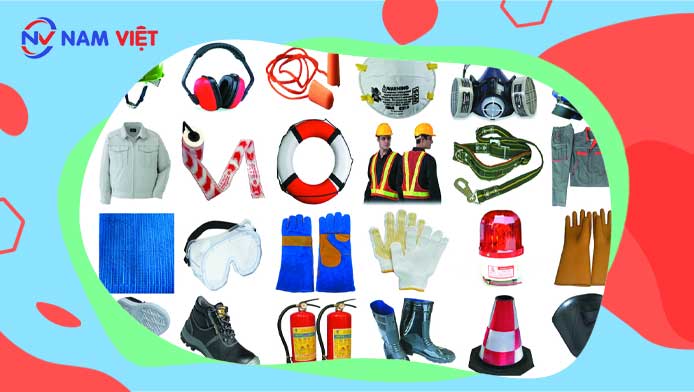
In the workplace, using safety tools and equipment is crucial to minimize risks and ensure worker safety. Below are commonly used tools and equipment:
- Safety helmets: Used to protect the head and reduce impact risks.
- Safety glasses: Protect the eyes from particles, liquids, and irritants.
- Protective gloves: Protect hands from sharp objects, toxic chemicals, and heat.
- Safety shoes: Made with anti-slip and impact-resistant materials.
- Safety ladders: Provide stability when working at height.
- Protective clothing: Fire-resistant or chemical-resistant materials to protect the body.
- Safety harnesses: Used for securing workers when working at height.
- Alarm and warning devices: Sirens, signal lights, warning signs.
- Emergency exit systems: Emergency exits and escape routes.
- Fire protection systems: Fire extinguishers, foam cylinders, fire alarm systems.
The proper and complete use of these tools is the responsibility of both workers and employers to ensure a safe and healthy working environment. Learn more about occupational safety training content under Decree 44.
V. How to build an effective OSHL training program for employees.
Building an effective Occupational Safety and Hygiene (OSHL) training program is essential to create a safe working environment. Here are key steps:
- Training needs assessment: Identify safety training needs and risks for each employee group.
- Define training objectives: Based on needs assessment, set specific objectives—awareness, skills, hazard prevention.
- Training program design: Combine theory and practice with appropriate methods such as group discussion, hands-on training, and direct instruction.
- Use of learning materials: Utilize documents, videos, images, and real case studies to improve understanding.
- Customization for each group: Tailor training based on job roles and hazards faced.
- Evaluate training effectiveness: Assess knowledge and skills after training; track safety indicators.
- Continuous updates and improvement: Regularly update training content based on changes in workplace conditions.

VI. Optimizing the workplace: Creating a safe and dynamic working environment.
Optimizing the workplace is essential for creating a safe, dynamic environment and improving productivity. Below are methods to achieve this in the OSHL Handbook:
- Ensuring cleanliness and orderliness: A clean and organized environment reduces the risk of injuries and occupational diseases.
- Improving natural and artificial lighting: Proper lighting enhances concentration and reduces fatigue.
- Ensuring comfort and safety in the workspace: Adequate space, ventilation, and safety measures are essential.
- Promoting physical activity: Encourage exercise, yoga, or team sports to maintain employee health.
- Building a safety and dynamic culture: Encourage compliance with OSHL regulations and create a supportive environment.
- Enhancing OSHL training: Regular training improves awareness and skills to handle hazards.
Optimizing the workplace not only reduces risks but also creates a positive, productive environment, contributing to sustainable business growth. Learn more about occupational safety training duration under Decree 44.

VII. The importance of OSHL compliance in improving work performance and reducing risks.
- Improving work performance: When employees feel safe, they work more confidently and efficiently.
- Reducing occupational accident risks: Compliance with OSHL reduces accidents and occupational diseases.
- Building a safety culture: Employees become more aware, responsible, and vigilant.
- Creating stability and sustainability: Fewer accidents mean lower compensation costs and better corporate reputation.

VIII. Occupational Safety Training Capability of An Toàn Nam Việt
An Toàn Nam Việt is a reputable and high-quality occupational safety training center in Vietnam. Safety training sessions are conducted continuously at factories, plants, and construction sites across all 63 provinces in Vietnam.
REGISTER FOR OCCUPATIONAL SAFETY TRAINING SERVICES
Training License
- An Toàn Nam Việt has been inspected and certified by the Department of Work Safety under the Ministry of Labour, Invalids and Social Affairs as fully qualified to conduct occupational safety and hygiene training. This further strengthens our training capability.

Training materials and curriculum
- All training materials are reviewed and approved before being used in OSHL training courses.
- Teaching methods are standardized based on An Toàn Nam Việt’s guidelines, developed by experts in occupational safety and hygiene training.
Facilities
- We control classroom conditions to enhance teaching quality and learning effectiveness.
- Our training facility infrastructure meets standards for size, lighting, and equipment.
IX. Nationwide Occupational Environment Monitoring Center
The Occupational Environment Monitoring Center of Nam Việt is a professional unit specializing in monitoring and measuring workplace environmental quality nationwide. With a team of experienced occupational environment monitoring specialists, the center uses modern measuring equipment to ensure accuracy and reliability.
REGISTER FOR OCCUPATIONAL ENVIRONMENT MONITORING SERVICES
In addition to monitoring services, the center supports clients in planning, handling, and managing workplace environmental issues. With a customer-centric philosophy, we meet all needs and provide optimal solutions for businesses.
With investments in technology and human resources, Nam Việt’s monitoring center has become one of the reputable units in Ho Chi Minh City, with the following goals:
- We highly value our brand reputation and service quality.
- We provide the best and most suitable solutions for customers.
- Our team includes experienced Masters and Engineers dedicated to environmental protection and business benefits.
- With Nam Việt’s Environmental Monitoring team, your company will receive professional service and competitive pricing.
The occupational environment monitoring process at Nam Việt includes:
- Before monitoring, we ensure all equipment is calibrated according to regulations.
- We follow the procedures committed to the Department of Health.
- We report monitoring results honestly to the employer.
- If results indicate unsafe conditions, Nam Việt provides solutions, and the employer must:
- Implement improvements to reduce harmful exposure and prevent occupational diseases.
- Organize health checks to detect early occupational diseases for affected workers.
- Provide nutritional supplements as required by law.