
Response drill
Collaboration In Responding To Global Incidents Such As Pandemics Or Natural Disasters

Dec
The world is facing many challenges, including occupational accidents. Every year, millions of people are injured or die due to work-related accidents. To respond to this issue, several countries and international organizations have collaborated to implement programs and projects aimed at raising awareness, improving working conditions, and minimizing occupational accidents. This article, “Some countries and international organizations collaborate to respond to global incidents like pandemics or natural disasters,” will focus on collaborative efforts, providing a detailed look at how they propose and implement strategies and resources to reduce occupational accidents and protect precious human resources.
I. The necessity of international cooperation in the specific threat of occupational accident incidents
Occupational accidents are a global problem, causing enormous losses in terms of people, property, the environment, and socio-economic aspects. According to statistics from the International Labour Organization (ILO), approximately 2.8 million people die each year worldwide from occupational accidents, over 374 million people suffer serious injuries, and millions suffer from occupational diseases.
Occupational accident incidents can occur in any country, regardless of its level of socio-economic development. However, in developing countries, occupational accidents tend to increase due to many reasons, such as:
- Rapid economic development leads to an increase in the labor force, including many young workers who have not been properly trained in occupational safety.
- Investment in occupational safety has not received adequate attention, leading to inadequate equipment and personal protective equipment.
- State management of occupational safety still has many shortcomings.
In the context of globalization, countries have increasing economic, trade, and investment links with each other. This leads to businesses and workers from various countries moving and working in other countries. Therefore, occupational accident incidents can happen in any country, regardless of whether it is where the worker is employed or where the product or goods are produced.
International cooperation in the field of occupational safety is an urgent requirement, contributing to minimizing the risk of occupational accidents, protecting the health and lives of workers, and promoting socio-economic development of nations.
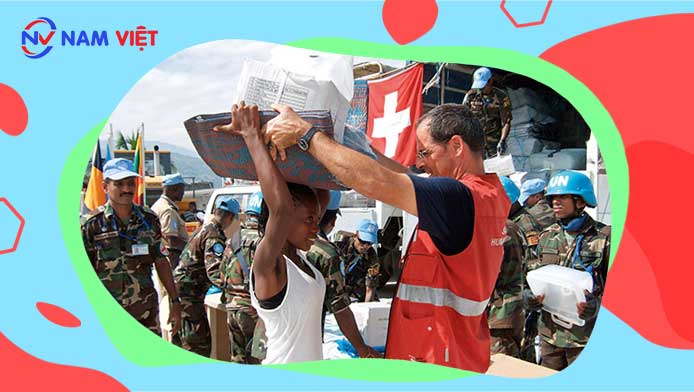
II. Specific strategies and measures that countries and international organizations are implementing to minimize risks and protect workers
To minimize risks and protect workers, responding to global incidents and international cooperation are implementing several specific strategies and measures, including:
Improving the legal system and labor policies: This is the crucial foundation for protecting workers’ rights. Countries and international organizations are striving to perfect their legal systems and labor policies, ensuring they align with international standards, including:
- Creating a safe and healthy working environment for workers
- Protecting the legal rights and interests of workers, including the right to wages, rest, social insurance, health insurance, etc.
- Combating discrimination in labor
- Protecting the rights of migrant workers
Enhancing education and vocational training for workers: Education and vocational training help workers improve their skills and craftsmanship, meet labor market demands, and thereby reduce the risk of unemployment, occupational accidents, and occupational diseases.
Strengthening the role of trade union organizations: Trade unions represent the interests of workers. Strengthening the role of trade unions helps workers participate in monitoring the enforcement of labor laws and protecting their rights.
Enhancing international cooperation: International cooperation helps countries share experiences, knowledge, and resources to minimize risks and protect workers.
Some specific examples of strategies and measures that countries and international organizations are implementing include:
-
In Vietnam, the Government issued the Labor Code 2019, which clearly defines the rights and obligations of workers and businesses. The Government is also implementing the National Program on Occupational Safety and Health for the 2021-2025 period with the goal of reducing occupational accidents and diseases and improving labor productivity.
-
The International Labour Organization (ILO) has issued several international labor conventions, including the Convention on Child Labour, the Convention on Forced Labour, the Convention on Occupational Safety and Health, etc. The ILO is also implementing programs and projects to support countries in implementing these conventions.

III. The significant role of volunteers in responding to global incidents, especially occupational accident incidents
In the context of globalization, global incidents are becoming more common and diverse, including natural disasters, epidemics, wars, terrorism, etc. These incidents cause enormous losses of life and property, seriously affecting people’s lives.
In responding to global incidents and international cooperation and the role of volunteers plays an extremely important role. They are people willing to dedicate their energy, intellect, time, and money to help those affected by the incidents.
For occupational accident incidents, volunteers have a significant role in:
- Rescue and relief: Volunteers are the first to arrive at the accident scene to help victims. They can perform first aid, rescue operations, safely evacuate victims, etc.
- Medical care: Volunteers can assist doctors and nurses in providing medical care to victims, including providing medicine, food, drinking water, etc.
- Psychological support: Volunteers can help victims of occupational accidents overcome physical and mental trauma. They can talk, listen, encourage, and share with the victims, etc.
- Recovery and reconstruction: Volunteers can participate in recovery and reconstruction activities after occupational accidents, including cleaning up the scene, rebuilding homes, businesses, etc.
Volunteers are a crucial force in responding to global incidents, especially occupational accident incidents. They contribute to minimizing the loss of life and property, helping those affected by incidents overcome difficulties and stabilize their lives.
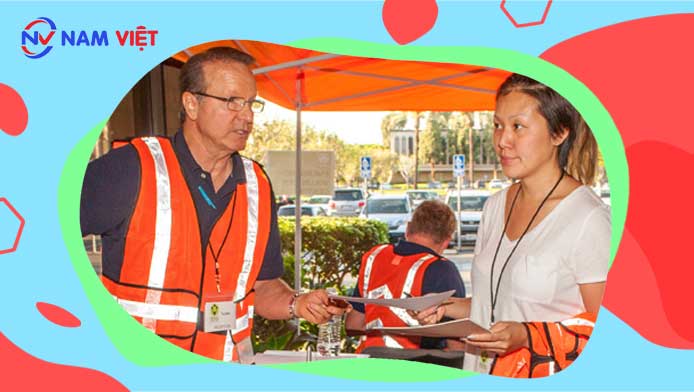
IV. International models the world can learn from, especially in addressing the global problem of occupational accidents
Around the world, many international models have been successfully applied to address the problem of occupational accidents. Some typical models include:
- Tripartite social dialogue model: This model is applied in many countries, including Vietnam. This model brings together the participation of workers, employers, and the Government to discuss, build, and implement measures to ensure occupational safety. This model has significantly contributed to reducing occupational accidents in the countries where it is applied.
- Occupational safety risk management model: This model focuses on identifying, assessing, and controlling occupational safety risks in the workplace. This model has been successfully applied in many countries, including Finland, Sweden, etc. This model has helped significantly reduce occupational accidents in the countries where it is applied.
- Occupational safety human resource development model: This model focuses on training, raising awareness, and improving occupational safety skills for workers and employers. This model has been successfully applied in many countries, including Singapore, South Korea, etc. This model has made an important contribution to raising the awareness and responsibility of workers and employers in ensuring occupational safety.
Additionally, countries can also learn from each other’s experiences through cooperation, information exchange, and sharing of experiences. For example, the International Labour Organization (ILO) frequently organizes international conferences and workshops on occupational safety to share experiences and promote cooperation among countries in addressing the problem of occupational accidents.
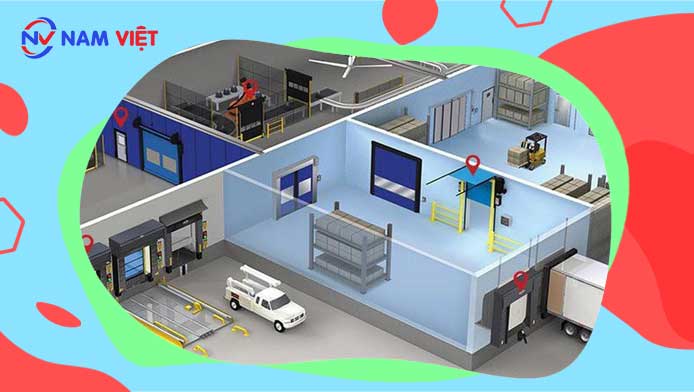
V. Commitments of countries and organizations to creating a safe working environment and facing challenges related to occupational accidents
Occupational accidents are a serious problem, causing severe consequences in both material and spiritual terms for workers, businesses, and society. To address this problem, countries and organizations around the world have made strong commitments to create a safe working environment and face the challenges related to occupational accidents.
Commitments of countries
At the national level, countries have enacted laws and regulations on occupational safety to protect workers. These laws and regulations stipulate issues such as:
- Standards for occupational safety and health
- Responsibilities of employers and employees in occupational safety work
- Measures for handling violations of occupational safety laws
In addition, countries also establish agencies and organizations specializing in occupational safety to perform tasks such as:
- Propagandizing and disseminating laws on occupational safety
- Inspecting and supervising the implementation of occupational safety laws
- Handling violations of occupational safety laws
Commitments of organizations
Responding to global incidents and international cooperation also involves strong commitments to promoting occupational safety. One of the most important organizations in this field is the International Labour Organization (ILO). The ILO has issued many conventions and recommendations on occupational safety, including Convention No. 81 on Labour Inspection in Industry and Commerce and Convention No. 155 on Occupational Safety and Health. These conventions have been ratified by many countries around the world.
Besides the ILO, many other international organizations also have commitments to occupational safety, such as:
- World Health Organization (WHO)
- World Trade Organization (WTO)
- European Union (EU)
Facing the challenges
Although countries and organizations have made strong commitments, occupational accidents remain a serious problem worldwide. The reasons for this situation are:
- Socio-economic development leads to an increase in the number of workers, especially in high-risk occupations for occupational accidents, such as: construction, mining, industrial production, agriculture…
- Lack of understanding of occupational safety by workers and employers
- Weaknesses in the occupational safety management systems in some countries
To address these challenges, countries and organizations need to continue their efforts in the following areas:
- Strengthen propaganda and dissemination of laws on occupational safety
- Raise awareness of workers and employers about occupational safety
- Boost investment in occupational accident prevention measures
- Improve occupational safety management systems

VI. Early warning and rapid response systems in the context of global occupational accidents
An effective early warning and rapid response system needs the following elements:
- A widespread information network: The system needs to cover all industries, sectors, and socio-economic operational areas.
- A mechanism for rapid information collection and processing: The system needs the ability to collect information from various sources, including functional agencies, workers, businesses, etc., and process the information quickly and timely.
- Effective response measures: The system needs to have response measures appropriate for each type of risk, aiming to minimize the damage caused by occupational accidents.

VII. Proposed future directions for international cooperation on the emerging issue of occupational accidents
To respond to global incidents and international cooperation requires close collaboration between countries. On that basis, some future directions for international cooperation on the issue of occupational accidents can be proposed as follows:
-
Enhance the exchange of information and experience on occupational accident prevention. This is one of the important foundations for countries to learn from each other, share experiences, and improve the effectiveness of occupational accident prevention. Countries can exchange information on regulations and standards for occupational safety and health; effective models and solutions for occupational accident prevention; and information on the global occupational accident situation.
-
Cooperate in research and development of occupational safety technologies and equipment. The development of science and technology has opened up new opportunities for occupational accident prevention. Countries can cooperate in researching and developing new, modern occupational safety technologies and equipment suitable for the actual conditions of each country.
-
Cooperate in capacity building for policymakers and law enforcement officers on occupational safety and health. Enhancing the capacity of policymakers and law enforcement officers on occupational safety and health is a key factor in ensuring the effectiveness of occupational accident prevention activities. Countries can cooperate in organizing training courses, workshops, and expert exchanges on occupational safety and health.
-
Cooperate in resolving cross-border occupational accident issues. With the growth of international trade, cross-border occupational accident issues are becoming more common. Countries can cooperate in resolving cross-border occupational accident issues, such as exchanging information on accident cases, supporting each other in investigating and handling accident cases, and compensating victims.
Strengthening international cooperation on the issue of occupational accidents is an urgent requirement to contribute to reducing occupational accidents and protecting the health and lives of workers. Countries need to join hands to achieve this goal.
In addition to the above directions, countries also need to pay attention to the following issues:
-
Enhance education and raise awareness of occupational safety and health for workers. This is an important factor for workers to proactively prevent occupational accidents.
-
Strengthen inspection and supervision of the implementation of regulations on occupational safety and health. Regular inspection and supervision will help detect and promptly handle violations of occupational safety and health.
-
Increase investment in occupational safety and health work. Investing in occupational safety and health is a long-term, effective investment that helps reduce costs for businesses and society.
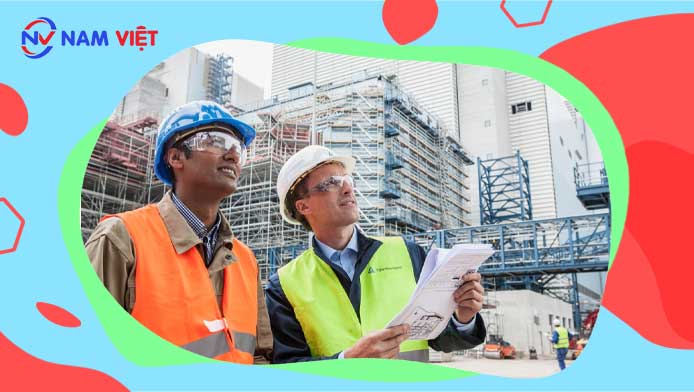
VIII. Occupational Safety Training Capability of An Toan Nam Viet
An Toan Nam Viet is a reputable and high-quality center specializing in occupational safety training (in various languages such as English, Chinese, Japanese, Korean….) in Vietnam today. With occupational safety training sessions held continuously at workshops, factories, or construction sites across the country (63 provinces in Vietnam).
REGISTER FOR OCCUPATIONAL SAFETY TRAINING SERVICES
Occupational safety training License
- An Toan Nam Viet has been inspected and certified by the Department of Work Safety, Ministry of Labor – Invalids and Social Affairs as eligible to conduct occupational safety and hygiene training. This further strengthens our occupational safety training capabilities.

Materials and Lectures
- Before occupational safety training materials are used in OST training courses, they are reviewed and approved to ensure lectures are always accurate in knowledge and effective when applied.
- The teaching methods of our instructors are standardized according to An Toan Nam Viet‘s teaching standards, a method researched and refined by experts in occupational safety and hygiene training during the teaching process to bring the highest knowledge absorption efficiency to students.
Facilities
- Controlling factors in the classroom that affect the training process will increase teaching efficiency and students’ knowledge absorption.
- Our training course support facilities always provide spacious classrooms that meet standards for area, lighting, training equipment, etc.
IX. National Occupational Environment Monitoring Center
Nam Viet’s Occupational Environment Monitoring Center is a professional unit specializing in monitoring and measuring the quality of the working environment across all provinces in Vietnam. With an experienced team of monitoring specialists, the center uses modern measuring equipment, ensuring accuracy and reliability.
REGISTER FOR OCCUPATIONAL ENVIRONMENT MONITORING SERVICES
In addition to providing monitoring services, the center also supports clients in planning, addressing, and tracking occupational environment issues. With the motto “the customer is the center,” we always strive for customer satisfaction, meet all customer needs, and commit to providing the best solutions for businesses.
With investment in techniques, technology, and human resources, Nam Viet’s monitoring center has become one of the reputable units in the field of occupational environment monitoring in Ho Chi Minh City, with the following objectives:
- We always value our brand reputation and the quality of our products and services.
- We provide customers with the best and most suitable solutions possible.
- With a team of experienced and specialized Masters and Engineers who wish to protect the environment and benefit businesses.
- Coming to Nam Viet’s Environmental Monitoring team, your company will receive professional service from experts in the monitoring field, along with the best cost incentives.
The occupational environment monitoring process at Nam Viet includes the following basic steps:
- Before conducting occupational environment monitoring, our company always ensures that machinery and equipment used for monitoring are adjusted and calibrated according to legal regulations.
- Correctly and fully implement the occupational environment monitoring process as committed to the Department of Health.
- Truthfully report the occupational environment monitoring results to the employer.
- In cases where the monitoring results do not ensure worker safety, Nam Viet company will assist in providing remedial solutions, and the facility will proceed as follows:
- Implement measures to improve working conditions to minimize the impact of harmful factors and prevent occupational diseases.
- Organize health check-ups to detect occupational diseases and work-related illnesses early for workers in positions with unsafe working environments.
- Provide in-kind benefits to workers according to labor laws.