
Personal Protective Equipment (PPE)
Providing adequate and quality protective gear is the responsibility of the employer

Oct
This article will explore the important role of employers in providing quality protective equipment to employees. Learn about the ways they can ensure safety and social responsibility.
I. Introduction to the important role of employers in protecting the health and safety of employees
Employers play a crucial role in protecting the health and safety of their employees. Not only do they make the work environment safer, but they are also responsible for ensuring that employees are trained and receive sufficient knowledge about safety. This is not just a legal duty, but also a moral mission and ensures that employees are a valuable asset to any organization.
Employers need to inspect equipment and machinery before use, build safety plans and measures, provide personal protective equipment, and ensure that employees understand and comply with safety regulations. In particular, they must ensure that employees are fully trained in occupational safety and are aware of the potential hazards that may occur during work.
Additionally, employers must provide full information about the situation of occupational accidents and hazardous factors to employees. They must consider improving working conditions and ensure regular health check-ups and treatment for employees.

II. Presenting the types of necessary protective equipment and how they contribute to occupational safety
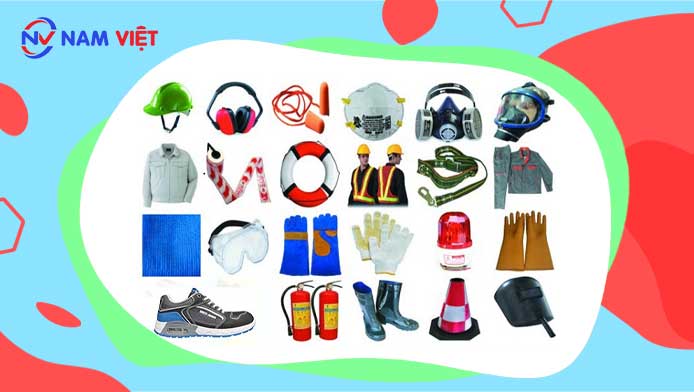
Protective equipment is an important part of occupational safety and comes in many different types, each serving a specific purpose to protect employees from hazardous elements in the work environment.
- Helmets: Helmets are an important part of head and neck protection, they prevent head injuries, liquid spills, or collision risks in hazardous environments.
- Safety Goggles: Safety goggles protect eyes from dust particles, chemicals, and injury-causing factors. They also contribute to protecting vision.
- Protective Clothing: Protective clothing is often made from flame-resistant, chemical-resistant, or puncture-resistant materials. They protect the skin and body from burns, chemicals, and injuries.
- Protective Gloves: Gloves provide protection for hands from chemicals, wounds, and infections. They reduce the risk of injury and protect the user’s health.
- Safety Shoes: Safety shoes have hard soles and protect feet from impacts, nails, and chemicals. They also help prevent slipping and injuries to the feet and heels.
- Protective Suits: Protective suits are often made from flame-resistant, chemical-resistant, or anti-static materials, ensuring safety for workers in hazardous environments.
III. Discussing the importance of providing quality protective equipment and its impact on workers
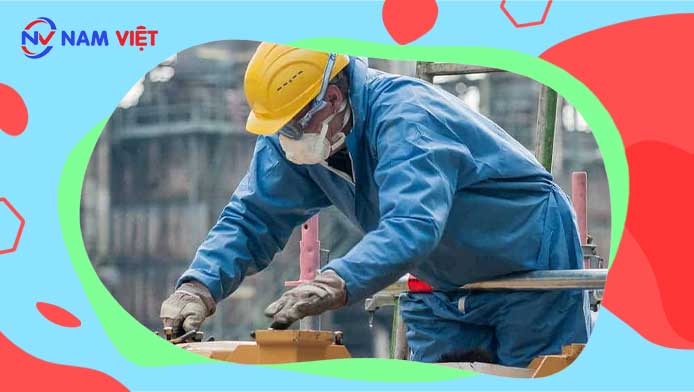
The quality of protective equipment is an extremely important factor in ensuring occupational safety and protecting workers’ health. Providing quality protective equipment not only ensures that workers get the best protection but also contributes significantly to the effectiveness of the occupational safety training program.
An occupational safety training program combined with the provision of quality protective equipment ensures that workers are equipped with the necessary knowledge and appropriate tools to face hazardous situations. This not only reduces the risk of occupational accidents but also creates a safer working environment.
If protective equipment is not of good quality, the risk of accidents increases, and workers may face dangers they cannot protect themselves from. Furthermore, poor-quality protective equipment can make it difficult to perform work tasks, leading to reduced work efficiency.
In the occupational safety training program, discussing the quality of protective equipment is an indispensable part. Workers need to be instructed on how to recognize and properly use various types of protective equipment, as well as report any incidents or damage. This ensures they are always protected and safe in the work environment.
IV. Discussing legal regulations and the employer’s obligations in complying with them
In the field of occupational safety, legal compliance is a critical factor that employers must clearly understand and implement. Occupational safety regulations are often related to protecting the health and lives of workers in the work environment.
Occupational Safety Certification is part of the legal regulations aimed at ensuring employers provide a safe working environment for workers. This certification’s purpose is to check and ensure that occupational safety rules and standards are adhered to.
Occupational Safety Certification may require employers to participate in periodic training and inspections to ensure they meet legal requirements for occupational safety. Compliance with this certification means implementing measures to protect workers from the risk of occupational accidents and safeguard their health.
In addition to providing a safe working environment, employers must also ensure they meet other legal obligations related to occupational safety. This may include reporting occupational accidents, monitoring employee compliance, and implementing occupational safety management regulations.

V. Comparing investment in quality protective equipment versus the financial and mental consequences of cost-saving
Deciding whether to save costs in occupational safety or invest in quality protective equipment is a challenge many businesses face. While there may be pressure to cut resources and save money, understanding the relationship between investing in occupational safety and the financial and mental consequences of cost-saving is crucial.
From a financial perspective, investing in quality protective equipment can create a safer work environment, reduce the risk of occupational accidents, and help save costs related to accidents, such as paying insurance and compensation. Additionally, worker efficiency and performance are often better in a safe environment, leading to increased production and reduced time off work.
On the other hand, saving costs by providing low-quality protective equipment often leads to higher risks for workers, potentially resulting in occupational accidents and affecting their health. The mental consequences cannot be ignored either, with employees potentially feeling insecure and anxious when working in an unsafe environment.
VI. Presenting how employers can ensure employees understand protective equipment and how to use it correctly
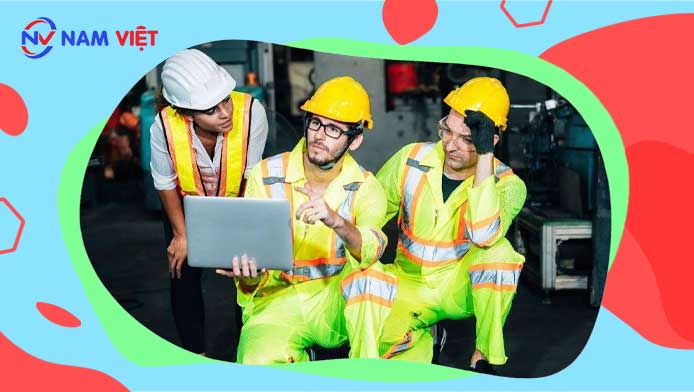
A crucial element in ensuring occupational safety is making sure employees clearly understand protective equipment and know how to use it correctly. Training and raising awareness about protective equipment are important parts of ensuring a safe work environment.
First and foremost, employers need to conduct training courses on occupational safety and the use of protective equipment for all new employees. These training courses should focus on how to use protective equipment correctly, from wearing respiratory protection masks to using protective clothing and safety shoes. At the same time, training needs to be combined with introducing occupational safety regulations and operational procedures related to the use of protective equipment.
Employers also need to create a work environment that encourages the use of protective equipment by promoting awareness and compliance. Disciplinary action and penalties for not using protective equipment can be a measure, but it needs to be combined with creating an environment where everyone feels safe and responsible for their own safety and that of their colleagues.

VII. Concluding with positive changes in the work environment and the importance of providing adequate and quality protective equipment for success and gratitude from employees
When employers invest in providing adequate and quality protective equipment for employees, they not only create a safe working environment but also contribute to the success of the business. Protective equipment not only ensures safety but also improves performance and employee satisfaction.
When employees feel protected and cared for in terms of their health and safety, they often work more effectively. This helps increase production, minimize sick leave due to occupational accidents, and helps the business save costs.
However, the true value of providing quality protective equipment is not just reflected in the accounting numbers. It is also reflected in the gratitude of the employees. Workers who know they are cared for and protected will be more grateful and have a stronger bond with the business. They will be thankful for being treated as an important part of the organization and contributing to its development.
VIII. An Toan Nam Viet’s Occupational Safety Training Capability
An Toan Nam Viet is a reputable and high-quality center specializing in occupational safety training (in various languages such as English, Chinese, Japanese, Korean….) in Vietnam today. With occupational safety training sessions held continuously at workshops, factories, or construction sites across the country (63 provinces in Vietnam).
REGISTER FOR OCCUPATIONAL SAFETY TRAINING SERVICES
Occupational safety training License
- An Toan Nam Viet has been inspected and certified as eligible for occupational safety and hygiene training activities by the Department of Safety of the Ministry of Labor – Invalids and Social Affairs. This further strengthens our occupational safety training capability.

Materials and Lectures
- Before occupational safety training materials are used in OSH training courses, they are reviewed and approved to ensure that the lectures are always accurate in knowledge and effective when applied.
- The teaching methods of the instructors are standardized according to An Toan Nam Viet’s teaching standards, which is a method that experts in occupational safety and hygiene training have researched and refined during the teaching process to bring the highest knowledge acquisition efficiency for trainees.
Facilities
- Controlling factors in the classroom that affect the training process will increase teaching efficiency and the trainees’ knowledge acquisition effectiveness.
- Our facilities supporting the training course always arrange spacious classrooms that meet standards for area, lighting, training equipment, etc…
IX. Nationwide Occupational Environment Monitoring Center
Nam Viet’s Occupational Environment Monitoring Center is a professional unit for monitoring and measuring the quality of the working environment in all provinces throughout Vietnam. With a team of experienced monitoring specialists, the center uses modern measuring equipment, ensuring accuracy and reliability.
REGISTER FOR OCCUPATIONAL ENVIRONMENT MONITORING SERVICES
In addition to providing monitoring services, the center also supports clients in planning, handling, and tracking occupational environment issues. With the motto “customer is the center,” we always bring satisfaction to customers, meet all their needs, and commit to providing the best solutions for businesses.
With investment in techniques, technology, and human resources, Nam Viet’s monitoring center has become one of the reputable units in the field of occupational environment monitoring in Ho Chi Minh City, with the following objectives:
- We always value our brand reputation and the quality of our products and services.
- We provide customers with the best and most suitable things possible.
- Along with a team of experienced and professional Masters and Engineers with a desire to protect the environment and benefit businesses.
- Coming to Nam Viet’s Environmental Monitoring team, your company will receive professional service from experts in the monitoring field. At the same time, you will get the best cost incentives.
The occupational environment monitoring process at Nam Viet includes the following basic steps:
- Before conducting occupational environment monitoring, our company always ensures that machinery and equipment used for monitoring are adjusted and calibrated in accordance with legal regulations.
- Correctly and fully implement the occupational environment monitoring process as committed to the Department of Health.
- Truthfully report the occupational environment monitoring results to the employer.
- In cases where the occupational environment monitoring results do not ensure safety for employees, Nam Viet company will assist in providing remedial solutions, and the labor facility will implement the following:
- Implement measures to improve working conditions to minimize the impact of harmful factors and prevent occupational diseases.
- Organize health check-ups for early detection of occupational diseases and work-related illnesses for employees in positions with unsafe working environments.
- Provide in-kind benefits to employees according to labor laws.