
Workers' health
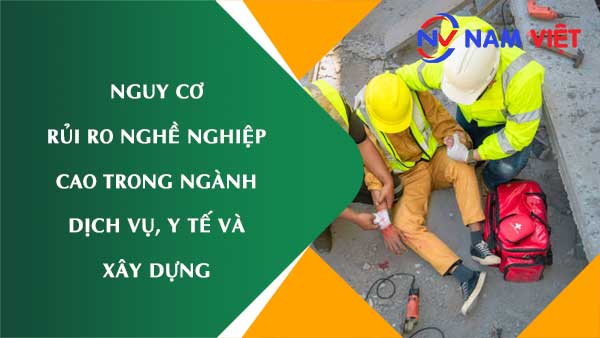
High Occupational Risk in the Service, Healthcare, and Construction Sectors
Nov
Immerse yourself in the challenging world of the service, healthcare, and construction industries. This article is a journey to explore the risks that are silently threatening career stability. Join us to learn about and discover dynamic strategies to face challenges and protect your professional future!
I. Risks in the service, healthcare, and construction sectors
In important sectors like services, healthcare, and construction, a variety of risks exist that threaten professional stability. In the service industry, market volatility and increasing customer demands can place great pressure on personnel.
Meanwhile, the healthcare sector faces challenges regarding occupational safety and pressure to enhance the quality of care. In construction, risks from complex projects to harsh working conditions can affect the health and safety of workers.
These risks not only pose individual challenges but also impact the sustainability and development of the entire industry. To better understand how to face these dangers, we need to specifically examine each sector and identify effective strategies to protect professional stability.

II. Challenges facing the service industry and how they impact workers
In the service industry, the challenge is not only about providing products and services but also about innovation and rapid adaptation to market volatility. This places great pressure on workers, requiring them to constantly update their skills and knowledge. Furthermore, fierce competition and pressure for performance can cause psychological stress and increase the risk of burnout.
Another challenge is the digital transformation, as many traditional jobs are being replaced by automation. This not only requires new training but also creates concerns about job losses. For employees, understanding and adapting to these changes becomes key to maintaining and developing their careers.
In summary, the biggest challenge facing the service industry is not just mastering expertise but also the ability to adapt and reinvent oneself in the context of a rapidly changing work environment.

III. Occupational safety training in the service, healthcare, and construction industries
Occupational safety training plays a crucial role in minimizing risks and protecting employees in the service, healthcare, and construction industries. In the service industry, where the impact of customers and the work environment is constantly changing, training employees in occupational safety helps them recognize and face potential hazards, while also enhancing safety awareness in all work situations.
In the healthcare sector, occupational safety training not only helps protect the health of employees but also ensures the quality of patient care. In this way, it becomes a decisive factor in building a safe and effective work environment.
In construction, training on occupational safety is not just a legal obligation but also an opportunity for employees to equip themselves with the necessary knowledge and skills to work safely on complex projects. This helps reduce the risk of occupational accidents and increases efficiency in construction project management. Occupational safety training becomes a crucial part of the foundation to ensure everyone working in these fields has the necessary knowledge and skills to protect themselves and simultaneously maintain the quality of their work.

IV. Specific risks related to the construction industry and how this industry is responding to them
The construction industry faces special risks that require intelligent management and response. Complex projects not only present potential occupational safety hazards but also challenges in project and resource management. Natural factors such as weather also contribute to the uncertainty of the work environment.
In this context, the construction industry is applying new strategies to minimize risks. Innovation in building materials and smart construction technology helps enhance safety and efficiency. At the same time, promoting awareness of occupational safety through specialized training is an important step to reduce the risk of accidents and injuries.
Construction businesses are also focusing on risk management during project implementation. Applying effective project management systems helps forecast and respond to challenges that may arise, ensuring that all work proceeds according to plan and safely.
Overall, the construction industry is not only well aware of the specific risks but is also actively applying measures to protect employees and ensure the quality of projects.

V. Specific risks in the healthcare sector and the importance of occupational safety
The healthcare industry faces special risks, demanding particular attention to occupational safety. With a challenging work environment and the need for precision, the risk of accidents and infection are significant issues. This not inly affects the health of employees but also has a direct impact on the quality of healthcare services.
The importance of occupational safety in the healthcare sector is not just about protecting employees, but also ensuring patient safety. Special attention to hygiene and safety procedures is crucial to prevent the spread of infection and maintain a healthy medical environment.
Furthermore, a group of healthcare workers safe in their occupation also helps create a positive and stable work environment, positively affecting morale and employee satisfaction. All these factors together lay the foundation for an effective and safe healthcare system, where everyone feels confident and secure.

VI. Methods and strategies to minimize risk and ensure occupational safety
To minimize risk and ensure occupational safety, specific methods and strategies in managing the work environment play an important role. One of the effective means is work environment monitoring, which involves closely supervising factors affecting the health and safety of employees.
Using work environment monitoring technologies helps identify risks and implement effective preventive measures. This includes measuring exposure levels to toxic substances, inspecting working conditions, and monitoring changes in the work environment over time.
Along with that, training employees on how to use and understand data from the monitoring system is important. Encouraging a safety-focused attitude and awareness of the work environment is also a key strategy to ensure everyone actively participates in the occupational safety process. By combining these measures, businesses can create a safe work environment, reduce risks, and protect the health of their employees.

VII. Positive improvements and bright prospects for workers
Despite the risks and challenges, the service, healthcare, and construction sectors are also undergoing positive improvements and opening up bright prospects for workers. In the service industry, the rapid growth trend of the market can create many new and diverse career opportunities. This paves the way for personal development and career advancement.
In the healthcare sector, advances in technology and medical research bring modern treatment methods and new opportunities to participate in diverse healthcare fields. Healthcare professionals have the opportunity to drive innovation and improvement in developing healthcare solutions.
In construction, the sustainable building trend is opening up new opportunities to participate in environmentally friendly projects. Construction professionals can play an important role in building structures that positively impact the environment and the community.
Overall, although there are challenges, positive improvements and new prospects are creating space for the development and success of workers in these industries.

VIII. Occupational Safety Training Capacity of An Toan Nam Viet
An Toan Nam Viet is a reputable and high-quality center specializing in occupational safety training (in many different languages such as English, Chinese, Japanese, Korean….) in Vietnam today. With occupational safety training sessions held continuously at production workshops, factories, or construction sites across the country (63 provinces in Vietnam).
REGISTER FOR OCCUPATIONAL SAFETY TRAINING SERVICE
Occupational safety training license
- An Toan Nam Viet has been inspected and certified by the Department of Work Safety – Ministry of Labour, Invalids and Social Affairs as eligible to conduct occupational safety and health training activities. This further strengthens our capacity in occupational safety training.

Materials and lectures
- Before occupational safety training materials are used in the OST courses, they are reviewed and approved to ensure that the lectures are always accurate in terms of knowledge and effective when applied.
- The teaching methods of the instructors are standardized according to An Toan Nam Viet‘s teaching standards, which is a method researched and summarized by experts in occupational safety and health training during the teaching process to bring the highest knowledge acquisition efficiency for trainees.
Facilities
- Controlling factors in the classroom that affect the training process will increase teaching efficiency and the effectiveness of knowledge acquisition by trainees.
- Our facilities supporting the training course always provide spacious classrooms that meet standards for area, lighting, training equipment …etc…
IX. Nationwide work environment monitoring center
The work environment monitoring center of Nam Viet is a professional unit specializing in monitoring and measuring the quality of the work environment across all provinces in Vietnam. With a team of experienced monitoring specialists, the center uses modern measuring equipment, ensuring accuracy and reliability.
REGISTER FOR WORK ENVIRONMENT MONITORING SERVICE
In addition to providing monitoring services, the center also supports clients in planning, handling, and tracking work environment issues. With the motto “customer is the center,” always bringing satisfaction to customers, meeting all customer needs, and committing to providing the best solutions for businesses.
With investment in techniques, technology, and human resources, Nam Viet’s monitoring center has been and is becoming one of the reputable units in the field of work environment monitoring in Ho Chi Minh City with the following objectives:
- We always value our brand reputation and the quality of our products and services.
- We provide our customers with the best and most suitable things possible.
- Along with a team of experienced Masters and Engineers with expertise and a desire to protect the environment and benefit businesses.
- Coming to Nam Viet’s Environmental Monitoring team, your company will receive professional service with experts in the field of monitoring. At the same time, you will get the best cost incentives.
The process of performing work environment monitoring at Nam Viet includes the following basic steps:
- Before performing work environment monitoring, our company always ensures that machinery and equipment used for work environment monitoring are calibrated and verified in accordance with legal regulations.
- Implement the work environment monitoring process correctly and fully as committed to the Department of Health.
- Truthfully report the work environment monitoring results to the employer.
- In case the work environment monitoring results are not safe for employees, Nam Viet company will support proposing remedial solutions and the labor facility will implement the following:
- Implement measures to improve working conditions to minimize the impact of harmful factors and prevent occupational diseases.
- Organize health checks to detect occupational diseases and work-related diseases early for employees in positions with unsafe work environments.
- Provide in-kind benefits to employees according to labor laws.