
Health
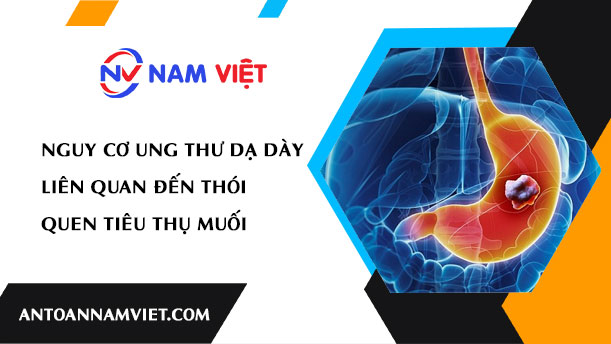
The Risk of Stomach Cancer Linked to Salt Consumption Habits
Dec
The signs of the relationship between salt and stomach cancer are becoming clearer. This article details the latest research, providing an in-depth look at how salt consumption habits can increase the risk of the disease. Find out now to protect your health and change your lifestyle!
I. The link between salt consumption habits and the risk of developing stomach cancer
Salt consumption habits are increasingly being scrutinized for their role in the risk of developing stomach cancer. Recent studies have shown a significant association between the amount of salt in the daily diet and the likelihood of this disease appearing.
Although salt is an important part of the diet, excessive consumption can lead to significant changes in the gastric mucosa. These mechanisms include increasing viscosity, affecting Helicobacter pylori bacteria, and causing mucosal damage, all of which can increase the risk of developing stomach cancer.
Salt can break down the protective barrier of the gastric mucosa, creating favorable conditions for H. pylori bacteria and carcinogenic compounds. Research results also indicate that long-term exposure to high salt levels can alter the properties of the mucosa, increasing the expression of cancer-causing proteins in the DNA chain.

II. The mechanisms by which salt increases risk, from changing gastric mucosal viscosity to cell proliferation and atrophy
Salt is not only a familiar component of the daily diet but also plays a significant role in the development of stomach cancer through a series of mechanisms. One of the most important mechanisms is salt’s ability to change the viscosity of the gastric mucosa. Studies have shown that long-term exposure to salt can alter the structure and properties of the mucosa, creating favorable conditions for H. pylori bacteria and other carcinogens.
Furthermore, salt also has the ability to stimulate cell proliferation, a particularly important phenomenon in the development of the disease. Uncontrolled cell growth can lead to the formation of atrophic gastritis and mucosal damage. This creates conditions for inflammation and can contribute to the transformation of the gastric mucosa, from inflammation to atrophy, one of the precancerous stages.
Therefore, understanding this mechanism is crucial for fully recognizing the relationship between salt consumption habits and the risk of developing stomach cancer. At the same time, this research opens new opportunities to prevent this disease by controlling daily salt intake and changing salty eating habits.

III. Salt creates favorable conditions for Helicobacter pylori bacteria to invade, thrive, and cause ulcers and stomach cancer
Salt is not just a simple seasoning in the diet; it also plays a significant role in the growth and spread of Helicobacter pylori (H. pylori) bacteria in the stomach, especially in the context of a high-salt environment. H. pylori bacteria are known to be one of the main causes of ulcers and even stomach cancer.
According to Dr. Vu Truong Khanh, Director of the Department of Gastroenterology – Hepatobiliary – Pancreatic at Tam Anh General Hospital Hanoi, research has shown that salt creates favorable conditions for H.P bacteria to penetrate the gastric mucosa, where they can thrive. The rapid proliferation of H.P bacteria in a salt-rich environment can contribute to gastric ulcers, one of the dangerous complications that can lead to cancer.
Understanding the link between salt and H. pylori bacteria opens new opportunities to inhibit the growth of this bacteria by controlling daily salt intake. This not only helps prevent ulcer problems but may also be an effective method to reduce the risk of stomach cancer associated with H. pylori bacteria.

IV. The impact of a salty diet, processed foods, and other compounds like cholesterol and nitrates on stomach health
A salty diet, especially the overuse of processed foods, is a significant factor contributing to stomach health conditions and can increase the risk of developing diseases, particularly stomach cancer. Consuming processed foods, such as salt-cured fish and meat, and smoked meats, can introduce large amounts of salt and unhealthy fats into the body, increasing pressure on the gastric mucosa and potentially contributing to the development of inflammation and mucosal atrophy.
In addition, compounds like cholesterol and nitrates, often found in processed foods, also have a negative impact on stomach health. Cholesterol, when consumed at high levels, can create conditions for uncontrolled cell proliferation and contribute to the transformation of the gastric mucosa. Similar to salt, nitrates can also increase the body’s production of N-nitroso compounds, posing a risk of genetic mutations and the development of stomach cancer.
A salty diet and processed foods not only increase chemical risks but also mechanical risks, forcing the stomach to work harder to process this unhealthy food load. Understanding these impacts is important to promote awareness of the importance of a healthy diet in protecting stomach health and reducing the risk of related diseases.

V. Results from studies emphasizing that consuming salt above recommended levels significantly increases stomach cancer risk
Results from numerous studies have highlighted the strong association between high salt consumption and an increased risk of stomach cancer. In general, people who consume salt above the recommended levels face a significantly higher risk than those who maintain a balanced diet and keep salt at a safe level.
A notable study published in the US National Library of Medicine in August 2022 from Griffith University and the University of Queensland (Australia) highlighted that the risk of stomach cancer increases significantly as salt consumption rises. This study not only focused on the amount of salt in the diet but also reflected the increased risk at each stage, from gastric mucosa inflammation to ulcers and finally cancer.
The increased risk of stomach cancer stems not only from high salt levels altering the characteristics of the gastric mucosa but also from creating favorable conditions for H. pylori bacteria to thrive. This is an important step in emphasizing the importance of controlling daily salt intake and implementing measures to reduce the risk of stomach cancer.

VI. Salty eating habits in Vietnam and how they may contribute to the problem of stomach cancer risk
Salty eating habits in Vietnam are contributing significantly to the problem of stomach cancer risk. Vietnamese people traditionally have a habit of seasoning food with salt, fish sauce, and various spices, which results in high daily salt consumption. According to a survey by the World Health Organization (WHO) in Vietnam, Vietnamese adults consume an average of 9.4g of salt per day, nearly double the recommended level of less than 5g.
This salty eating habit places Vietnamese people in a high-risk group for stomach health. The large amount of salt in the daily diet not only increases the risk of ulcers and gastric mucosa inflammation but also creates favorable conditions for Helicobacter pylori (H. pylori) bacteria to grow and cause stomach cancer.
To reduce this risk, Vietnamese people need to be more aware of the impact of salty eating habits and limit salt in their daily diet. Replacing salt with natural spices like chili powder, garlic, or using salt-free seasonings can be effective methods. In this way, we can maintain our characteristic culinary culture while simultaneously protecting our stomach health from the risk of cancer.

VII. Changing salty eating habits to reduce the risk of stomach cancer
Changing salty eating habits is an important step to reduce the risk of stomach cancer, especially since salt has been identified as one of the key factors contributing to the development of this disease.
- Use natural spices: Instead of using salt to season food, try natural spices like chili powder, garlic, pepper, or herbs like rosemary.
- Reduce consumption of processed foods: Processed foods often contain high levels of salt. Limit these products and choose fresh, home-cooked foods instead.
- Control salt when cooking: During cooking, control the amount of salt added. Use the recommended amount of salt or even a little less to reduce the total salt in the meal.
- Be mindful of high-salt foods: Foods like cured meats, packaged foods, and some types of fast food often contain large amounts of salt. Limit these types of foods.
- Make changes gradually: If you regularly consume a lot of salt, make changes slowly to give your body time to adapt and make it easier to maintain the new habit.
These adjustments not only help reduce the risk of stomach cancer but also bring comprehensive benefits to overall health. Changing salty eating habits is a positive decision to protect stomach health and ensure a healthy lifestyle.

An Toan Nam Viet – a leading unit in providing occupational safety training and workplace environmental monitoring services. We are proud to be a trusted partner for businesses, helping ensure a safe working environment and protecting workers' health.With extensive experience and a team of top experts, we are committed to delivering high-quality services while meeting all regulatory requirements on occupational safety and environmental monitoring.
Our occupational safety training services include educating and raising awareness among employees about safety regulations, equipping them with skills to handle dangerous situations, and implementing accident prevention measures. We continuously update and apply the latest knowledge to ensure your employees always work in a safe environment, minimizing the risk of occupational accidents and protecting their lives.
With our workplace environmental monitoring services, we use the most advanced equipment and methods to measure, monitor, and analyze the quality of air, water, and noise in the working environment. We provide detailed and accurate reports on pollution levels, helping businesses implement solutions to improve working conditions, ensure legal compliance, and create a healthy workplace for employees.
Contact Information:
- Nam Viet Occupational Safety Training and Environmental Monitoring Co., Ltd.
- Phone: 0908 111 791
- Email: lienhe@en.antoannamviet.com
- Website: https://en.antoannamviet.com