
First aid
First aid materials for people with electric shock
Apr
First aid for electric shock victims requires professional knowledge and must be performed quickly and correctly. In many cases, if the first aid is not done properly, the golden time may be missed, putting the victim at risk of death or severe complications later.
1. Causes of Electric Shock
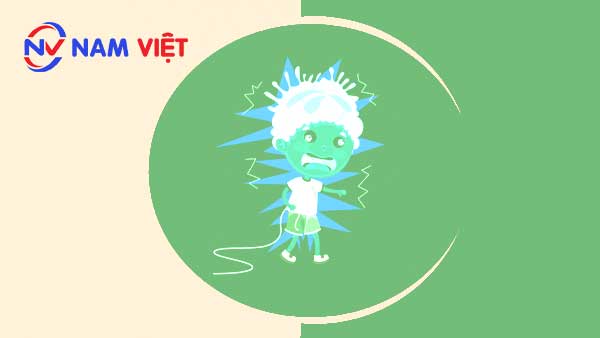
Electric shock is an accident caused by the effect of electric current that can kill or damage any part or function of the human body. Currently, electrical accidents occur frequently, mainly due to the victim’s lack of knowledge. The common causes of electric shock are:
- Direct contact with live objects.
- Touching exposed wires or defective conductors.
- Being struck by lightning.
- Using electrical equipment with leakage to metal surfaces.
- Repairing electricity without switching off the power source.
- Violating the safety distance from high-voltage power lines and substations, causing electric discharge.
- Arc discharge when switching electrical devices or circuit breakers.
- Contact with elements that have been disconnected from the power source but still retain charge.
- Natural disasters causing fallen wires to hit people.
- Incorrect connection of plugs and devices.
- Incomplete electrical installation.
- Using non-insulated materials or bare hands to pull the victim out.
- Unexpected incidents.

2. Separating the Victim from the Power Source
When seeing a person electrocuted, people often panic even if they have first aid knowledge. This can lead to mistakes affecting the lives of both the victim and the rescuer. The correct steps to separate a person from the power source are:
- The first step is to immediately turn off the power supply by switching off the circuit breaker or unplugging the cord.
- If the victim is shocked by high-voltage electricity, do not approach. Stand at least 6 meters away until the power is off. Rushing in can result in electric current passing through your body.
- Do not use conductive objects (metal, wet items) to separate the victim, as these conduct electricity. Use non-conductive items like wooden or plastic sticks instead. If possible, wear shoes with rubber soles and gloves before handling the victim.
- For victims shocked at height, handle carefully with proper equipment. Do not attempt to rescue without safety gear.
- Once separated, lay the victim down gently and avoid hard impacts.
- Avoid crowding around the victim to prevent breathing difficulty.

3. First Aid for Electric Shock Victims
After separating the victim from the electricity, handle the situation according to the victim’s condition:
a. Victim not breathing
Place the victim on their back in a dry, ventilated area. Loosen clothes and belts, clear the mouth of mucus, then perform CPR as follows:
- Place the palm on the lower third of the sternum, hands perpendicular to the chest, and compress at 60–100 times per minute without stopping for more than 10 seconds.
- Press 4–6 cm deep.
- After 10 compressions, give one deep rescue breath into the victim’s mouth.
- Continue rapidly and transfer the victim to the nearest hospital for advanced care (electric shocks, medication, heart stimulation machines, etc.).

b. Victim conscious, pink skin, clear pulse
- Move the victim to a dry, ventilated area, allow them to recover, and promptly transfer to a hospital for observation and care.
- Keep the victim warm.
c. Victim unconscious
If the victim shows signs like pale skin, weak or undetectable pulse, move them to a dry, ventilated area and transfer immediately to a hospital. Keep the victim warm.

4. Things Not to Do When Rescuing an Electric Shock Victim
During first aid, do not:
- Panic or lose composure.
- Stand barefoot while touching the victim.
- Touch the victim before ensuring they are separated from the power source.
- Attempt first aid without proper training or perform it incorrectly.
- Do not rub or apply oils on the victim.
- Do not pour water or cover the victim with mud.

5. Essential Skills for Rescuing an Electric Shock Victim
Knowing how to perform first aid correctly ensures safety and increases the chance of survival. The rescuer must have proper knowledge and experience:
- If the shock is from electrical outlets or leaking devices: turn off the nearest power source. If many wires are tangled, switch off the main breaker.
- If the power is high-voltage and cannot be turned off, contact the local power manager. Do not attempt to separate the victim yet. If tingling occurs in your lower body, jump with one foot to a safe distance.
- If the victim is in water, do not approach; first, find and turn off the power. Wear shoes to ensure safety.
- After turning off the power, separate the victim using non-conductive items (plastic or wooden sticks, chairs, bottles, rubber items) and push wires away.
- You may separate the victim by hand if safe, but non-conductive items are recommended.
- If unable to cut the power, wear shoes and use non-conductive objects to separate the victim.
- If the electricity is in a car, instruct the victim to stay inside until the power is off.

6. First Aid Training Center for Electric Shock Victims
An Toàn Nam Việt is proud to provide professional and reputable first aid training services with the following advantages:
- Competitive training fees while ensuring high quality.
- Flexible training schedule according to company production plans.
- Fast certification procedures in compliance with the law.
- Experienced instructors with many years in the field.
- Training materials tailored to workplace safety needs.
- An Toàn Nam Việt works diligently and professionally to support customers quickly and accurately.