
Safe learning method
Why safety training?
Jun
Ensuring occupational safety is not only the responsibility of each individual but also the duty of the entire enterprise. So why do we need occupational safety training? This article will highlight the clear benefits of safety training, from minimizing risks and workplace accidents to improving work efficiency and promoting sustainable business development. Let’s explore and gain a deeper understanding of the importance of occupational safety training in today’s work environment.
1. Occupational Safety and the Important Role of Training
Occupational safety is a crucial aspect not only for ensuring the well-being and health of workers but also directly affecting the performance and success of a business. In the workplace, accidents can occur at any time, leading to serious consequences for employees, their families, and the surrounding community. That is why occupational safety training plays a vital and indispensable role in every organization and enterprise.
One of the main benefits of occupational safety training is minimizing risks and workplace accidents. By equipping employees with the necessary knowledge and skills, training helps them identify and assess potential hazards during work. At the same time, it provides safe procedures and methods to apply in daily work. As a result, the risk of workplace accidents can be significantly reduced, creating a safer work environment.
Occupational safety training also plays an important role in improving work performance and quality. When employees are trained in safety and have solid knowledge of safe work procedures, they gain more confidence and work more efficiently. This leads to increased productivity and reduced human error. A safe work environment also enables employees to demonstrate their potential and creativity, thereby enhancing the quality of products and services.
2. Risks and Impacts of Workplace Accidents
a. Causes of Workplace Accidents
Workplace accidents are a serious issue that many organizations and businesses are trying to address. To better understand this situation, it is important to examine the causes of workplace accidents. There are many factors contributing to incidents and accidents, which need to be understood to prevent and minimize risks. Below are some common causes of workplace accidents:
- Lack of training: One of the main causes of workplace accidents is insufficient knowledge and safety skills. When employees are not adequately trained in safe work procedures, they may fail to recognize potential hazards and may not know how to respond correctly in dangerous situations.
- Inattention and lack of focus: The work environment requires high attention and concentration on daily tasks. However, inattention and carelessness can lead to minor mistakes that may cause serious consequences. This includes not following safety procedures, ignoring warning signs, or lacking awareness of the surroundings.
- Unsafe working conditions: Unsafe workplaces are a major factor contributing to accidents. This may include lack of protective equipment, poor hygiene, unsafe use of tools and machinery, or inadequate maintenance and management of equipment and facilities.
- Work pressure and poor management: High work pressure and lack of proper management can create a stressful and unsafe environment. When employees work under tight deadlines, prioritize tasks, or face high demands, they may ignore safety measures, creating risks for themselves and others.
- Unsafe and irresponsible behavior: Personal unsafe and irresponsible actions contribute significantly to workplace accidents. This may include failing to follow safety rules, misusing protective equipment, or using substances that impair judgment while working.
b. Impacts of Workplace Accidents on Employees and Enterprises
Workplace accidents not only have serious consequences for employees but also significantly affect business operations. The effects extend beyond individuals to the community and society. Key impacts include:
- Impact on employees: Accidents cause injuries and endanger workers’ lives. Severe injuries may result in permanent disability, loss of work ability, or even death. Affected employees face both physical and mental suffering, affecting their quality of life and daily activities.
- Psychological impact: Workplace accidents can strongly affect employees’ mental health. Painful and frightening experiences from accidents may cause stress, anxiety, and loss of confidence. Employees may feel insecure at work and lose motivation, leading to decreased productivity.
- Economic impact: Accidents reduce employees’ ability to work and income. Victims often require time off and medical treatment, resulting in lost wages and additional costs. For businesses, loss of workers can disrupt production, reduce productivity, and increase labor costs.
- Impact on reputation: Accidents can harm the company’s reputation. Enterprises that fail to ensure safety and proper training may be seen as irresponsible and uncaring about employee welfare. This can lead to loss of customer and community trust, affecting competitiveness.
- Impact on the work environment: Accidents create unsafe and unstable working conditions. Concerns about safety increase, leading to a stressful and unreliable workplace. This reduces employee satisfaction, motivation, and team spirit.
3. Benefits of Occupational Safety Training
a. Reducing Risks and Workplace Accidents
Occupational safety training equips employees with knowledge, skills, and awareness of workplace hazards. It helps them identify and assess dangerous situations, know how to respond, and avoid risks. Consequently, the likelihood of accidents is significantly reduced. Training also raises employees’ awareness of safety responsibility as a shared duty, not just a task for the safety team. Creating a safe work environment becomes a collective goal.
Training provides essential skills for working safely. Employees are instructed on proper use of protective equipment and work tools and learn how to handle specific safety issues in various tasks and situations.
Investing in occupational safety training reduces time and costs associated with accidents. Properly trained employees decrease the likelihood of incidents, minimizing workflow disruptions and costs related to treatment and compensation.
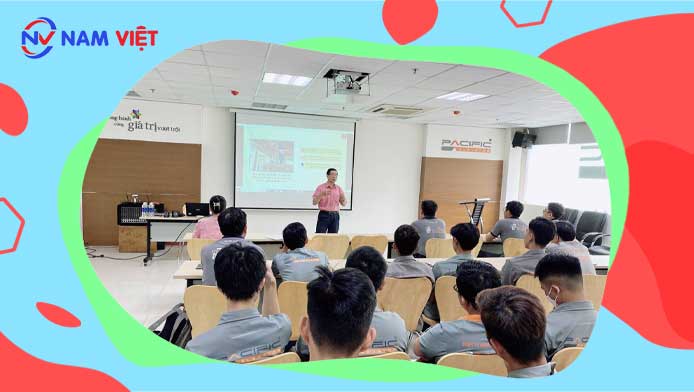
b. Enhancing Work Performance and Quality
When trained in safety, employees gain the knowledge and skills to work safely and efficiently. This increases confidence and professionalism. Employees learn to apply safety procedures and use protective equipment correctly, leading to better performance and outcomes.
Accidents and injuries can disrupt workflow. Safety training reduces accident risks, minimizing downtime. Employees gain skills to prevent accidents and respond safely and quickly to incidents.
A safe and secure work environment promotes efficiency and productivity. Employees can focus on work without worrying about hazards, increasing output and reducing errors. Training improves both work quality and service standards.
A strong safety policy and training investment create a trustworthy work environment. Employees feel valued, fostering cohesion, engagement, and a positive work culture.

c. Foundation for Sustainable Business Development
Safety training builds a safe and healthy work environment, enhancing confidence, focus, and morale. It helps attract and retain talent, contributing to stable, sustainable business growth. Training also reduces risks and costs associated with accidents by equipping employees to recognize and prevent hazards.
A strong safety policy and training boost the company’s image and reputation, showing care for employee health and safety, as well as product/service quality. Compliance with labor safety laws avoids legal risks and penalties, while improving safety performance enhances competitiveness.
4. Laws and Regulations on Occupational Safety
a. Legal Regulations on Occupational Safety
Regulations require businesses to assess and manage safety risks, identify potential hazards, apply preventive measures, and implement monitoring systems. They also require proper safety equipment usage and maintenance, as well as providing training for employees to recognize and respond to hazards.
Regulations mandate companies to establish accident management systems, report incidents promptly, and implement corrective actions. Legal consequences apply for violations, ensuring workers’ rights and protection.

b. Responsibilities of Enterprises and Employees
Businesses must identify and assess risks, apply preventive measures, and ensure safety equipment is properly used and maintained. They are responsible for providing training and guidance to equip employees with the skills to recognize, respond to, and prevent hazards.
5. Occupational Safety Training Strategies and Methods
Enterprises should first analyze training needs, identifying required skills and safety awareness. Then, determine which employees should attend based on job role, exposure to hazards, and specific needs. Training plans should include schedules, location, number of sessions, and methods, ensuring flexibility and effectiveness.
Various methods include in-person, online, group, or individual training. After completion, businesses should evaluate effectiveness, gather employee feedback, and make necessary adjustments.
6. Successes and Challenges in Occupational Safety Training
Occupational safety training is crucial but comes with challenges:
- Success is measured by employees gaining knowledge and skills to prevent hazards and apply safety in daily work.
- Interactive and engaging training enhances learning retention.
- Continuous updates ensure training remains relevant with changing regulations.
- Maintaining employee engagement and commitment can be challenging.
- Effectiveness should be measured using clear indicators and feedback.
7. An Toàn Nam Việt’s Occupational Safety Training Capabilities
An Toàn Nam Việt is a leading occupational safety training center in Vietnam, providing continuous training at factories and construction sites nationwide (63 provinces).
Licenses for occupational safety training
- Certified by the Department of Occupational Safety, Ministry of Labor, Invalids, and Social Affairs, confirming training eligibility and strengthening our training capabilities.

Training materials
- Materials are reviewed before training to ensure accuracy and effectiveness.
- Teaching methods are standardized, developed by experts, to maximize learning outcomes.
Facilities
- Classroom conditions are controlled to improve learning efficiency.
- Training facilities are spacious and meet standards for area, lighting, and equipment.
8. Nationwide Reputable Occupational Safety Training Center
At An Toàn Nam Việt, we prioritize professional occupational safety training. We meticulously prepare teaching tools, equipment, curriculum, materials, audio, and lighting.
Our trainers are experienced experts with research on hazard identification and prevention across industries. Lessons are practical, engaging, and compliant with Decree 44/2016/NĐ-CP, enabling employees to apply safety measures effectively.
Our Training Center offers professional occupational safety services with competitive costs, flexible schedules, rapid certification, experienced trainers, controlled classrooms, tailored lessons, and dedicated service.

9. Additional Occupational Safety Training References