
Safety management
Mechanical factory safety management
Apr
Management of mechanical factory safety is the process of managing and controlling hazards and risks related to safety in the production activities of a mechanical factory. The goal of safety management is to ensure that production activities are carried out safely and efficiently, protecting the lives, health, and assets of employees, customers, the community, and the environment.
Mechanical factory safety management includes activities such as hazard analysis and assessment, developing safety plans and policies, training employees on safety, inspecting and maintaining equipment, ensuring the safety of construction works, and managing waste. Safety management also ensures that the mechanical factory complies with legal regulations related to safety and environmental protection.
1. Overview of mechanical factories
a. What is a mechanical factory?
- A mechanical factory is a facility that manufactures mechanical equipment and other technical products using machinery and mechanical production techniques. Products manufactured in mechanical factories may include components and parts of machinery and industrial equipment, equipment for the energy industry, shipbuilding, vehicles, mechanical components, fabricated metal products, electronic products, medical products, and many others.
- Mechanical factories are typically equipped with mechanical devices, tools, and modern machinery to produce high-quality products with optimal productivity. Employees working in mechanical factories usually require specialized skills and knowledge to operate, manage, and maintain production equipment. These factories must comply with safety, environmental protection, and industrial production regulations.

b. Popular mechanical factory models in Vietnam
There are various mechanical factory models applied in Vietnam, including:
- Traditional mechanical factories: This is the most common mechanical production model in Vietnam for many years. These factories are small-scale, using simple and manual tools and machinery for production. Workers often lack high-level professional training, and production processes are often not fully optimized.
- Technology-based mechanical factories: These factories use modern machinery and technology in production. They are larger in scale, with significant investment in equipment and technology. Employees receive professional training and production processes are optimized.
- Mechanical processing factories: These factories specialize in machining parts and components of mechanical products rather than producing complete products. They typically supply parts to other manufacturers.
- Mechanical factories for the energy sector: These factories manufacture mechanical products for the energy industry, including components and equipment for power plants, clean energy production lines, and solar power projects. They are typically large-scale and equipped with modern technology.
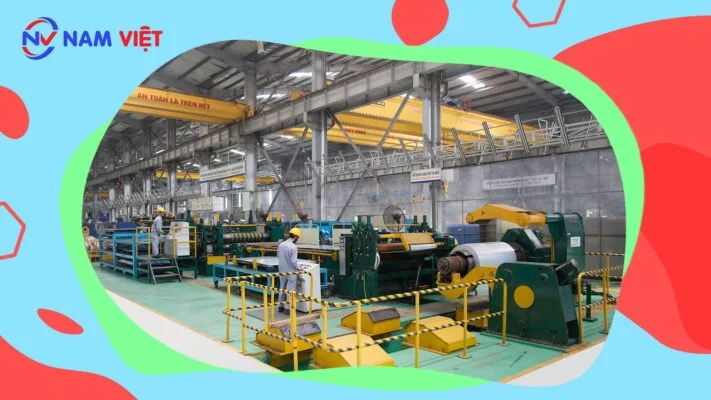
2. Ensuring material safety in mechanical factories
The process of ensuring material safety in mechanical factories is crucial to ensuring that the final product meets quality and safety standards. Below are key steps:
- Select reputable suppliers: Choose reliable suppliers for materials to ensure quality and safety.
- Identify materials: Determine the exact type of materials needed for each product, including metals, alloys, non-metal materials, and plastics.
- Inspect material quality: Check strength, ductility, hardness, and corrosion resistance before use.
- Store and preserve materials properly to avoid damage from temperature, humidity, or sunlight.
- Use and dispose of materials properly according to procedures to ensure safety.
3. Risk and hazard control in mechanical factories
To control risks and hazards, the following measures should be implemented:
- Assess and classify hazards to determine appropriate control measures.
- Apply control measures such as PPE, safety zones, regular inspections, etc.
- Regularly monitor equipment and processes to detect and fix hazards early.
- Ensure compliance with legal and internal safety regulations.
- Adjust and improve safety procedures for effectiveness.
Overall, hazard control in mechanical factories is a continuous process requiring strict and periodic implementation to ensure safety and prevent incidents.
4. Safety training management for mechanical workers
Safety training is crucial to raising awareness and improving safety skills among workers:
- Identify common risks in mechanical factories and assess their impacts.
- Develop training programs tailored to each worker group.
- Choose appropriate training times and locations, preferably at the factory.
- Use diverse learning materials such as lectures, presentations, videos, tests, etc.
- Conduct practical training and evaluate workers’ understanding.
- Update training periodically with new safety knowledge.
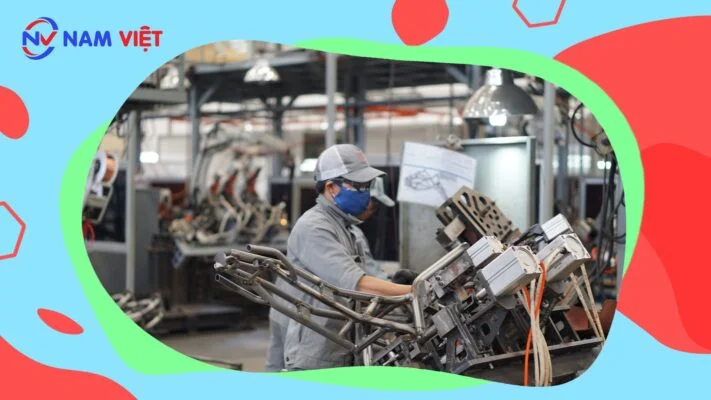
5. Maintenance of mechanical equipment
Key steps in equipment maintenance include:
- Develop a periodic maintenance plan.
- Regularly inspect equipment to detect early issues.
- Replace necessary components such as lubricants, filters, belts, bearings, etc.
- Clean equipment to remove dust, oil, rust, and contaminants.
- Test equipment after maintenance.
- Record maintenance activities for future reference.
Maintenance ensures continuous operation, increases equipment lifespan, and reduces failures and accidents.
6. Waste management in mechanical factories
Waste management includes:
- Identify and classify waste types.
- Create detailed waste management plans.
- Store waste safely in designated areas.
- Use appropriate waste treatment methods: recycling, reuse, incineration, safe disposal, etc.
- Use legal and safe transportation methods.
- Evaluate and improve waste management processes.
7. Electrical safety management in mechanical factories
- Assess electrical risks in the factory.
- Design electrical systems that meet safety standards.
- Perform periodic maintenance and inspection.
- Use protective measures such as anti-electric shock protection, safety labels, and lockout-tagout.
- Prepare emergency response plans.
- Handle incidents safely.
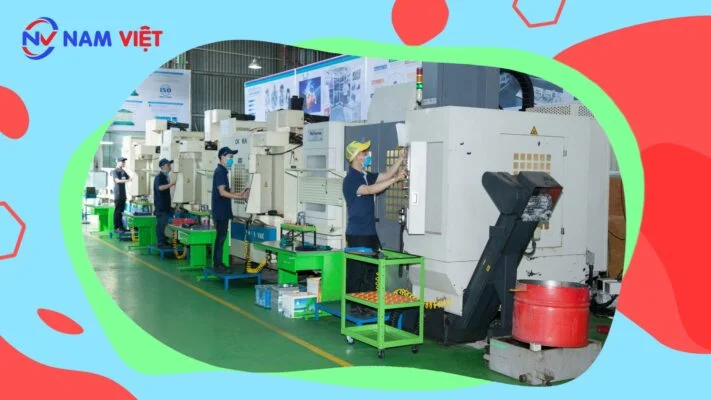
8. Ensuring construction safety within mechanical factories
- Design construction works according to standards and safety requirements.
- Select reputable and experienced contractors.
- Implement safety measures during construction.
- Prevent fire and explosion risks.
- Ensure safe use of mechanical equipment.
- Train construction workers on safety procedures.
- Conduct periodic inspections and maintenance.
9. Safety officer training in mechanical factories
a. What is Group 2 Safety Training?
- Occupational safety training for Group 2 equips trainees with safety and hygiene knowledge according to Article 18 of Decree 44/2016/NĐ-CP.
- Group 2 includes safety officers working in environments with high risks of occupational accidents or health hazards. The program helps them identify hazards, avoid risks, protect health, and improve safety awareness.
b. Training duration
- Total training duration is at least 48 hours, including testing time.
- 8 hours of legal and policy training
- 23 hours of safety operations training
- 4 hours of practical safety training
- 1-hour safety operations exam
- 6 hours of specialized safety training
- 2 hours of specialized practice
- 2 hours of theory test
- 2 hours of practical test
Training is typically divided into 12 sessions over 6 days, depending on factory scheduling.
c. Safety training certification
- After completing Group 2 safety training and passing the test, the trainee receives a Group 2 Safety Training Certificate.
- The certificate includes name, gender, date of birth, nationality, ID number, job title, organization, training dates, signature, and official stamp of the Director of Công Ty TNHH Huấn Luyện An Toàn và Quan Trắc Môi Trường Nam Việt.


d. Safety Training Capability of An Toàn Nam Việt
An Toàn Nam Việt is a reputable and high-quality safety training center in Vietnam, conducting continuous on-site training across 63 provinces.
Safety Training License
- An Toàn Nam Việt has been inspected and certified by the Department of Occupational Safety under the Ministry of Labour, Invalids and Social Affairs.

Training materials and teaching methods
- Training materials are reviewed and approved for accuracy and effectiveness.
- Teaching methods follow standardized procedures developed by occupational safety experts.
Facilities
- Training rooms are controlled to optimize learning conditions.
- Training facilities are spacious and fully equipped.

10. Occupational safety documents for safety managers